
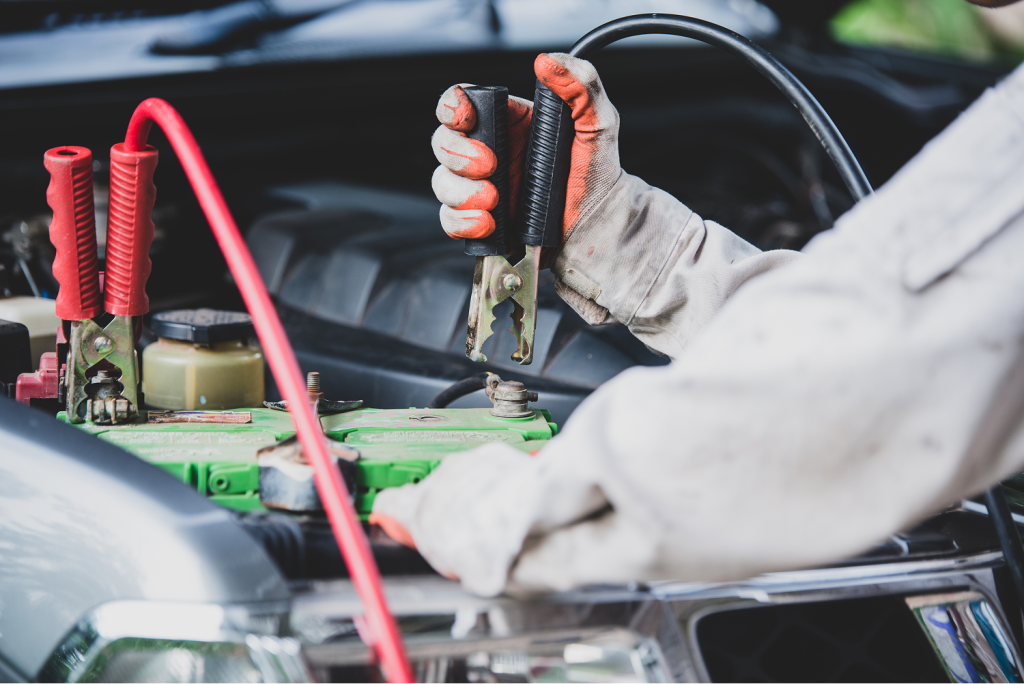
Your car has power. The lights come on. The battery tests good. But when you turn the key or press the start button, the engine still won’t start.
So, why won’t your car start if the battery is good?
A good battery does not necessarily mean the rest of the starting system is working properly. A faulty starter, alternator, ignition component, fuel system, sensor, wiring connection, or security system can prevent your vehicle from starting.
Below are seven common reasons a car won’t start even when the battery appears to be good.
Why Won’t My Car Start If the Battery Is Good?
If your battery is charged and functioning properly but your vehicle won’t start, the problem could be the starter motor, alternator, ignition system, fuel system, engine sensors, electrical wiring, or immobilizer system.
The sound your vehicle makes when you attempt to start it can provide an important clue.
- Rapid clicking: Possible electrical connection or battery-related issue
- One loud click: Possible starter problem
- Engine cranks but won’t start: Possible fuel, ignition, or sensor problem
- No sound at all: Possible starter, ignition switch, wiring, or security-system issue
- Vehicle starts and then dies: Possible alternator, fuel, or engine-management problem
If you’re unsure what the symptoms mean, professional mobile diagnostics can help identify the problem without requiring you to tow the vehicle to a shop.
1. The Starter Motor May Be Failing
One of the most common reasons a vehicle won’t start even with a good battery is a bad starter motor.
The starter is responsible for turning the engine over when you start the vehicle. If the starter fails, the engine may not crank even though the lights, radio, and other electrical accessories work normally.
Common signs of a bad starter include:
- A single click when turning the key
- No engine cranking
- Intermittent starting problems
- Starter works sometimes but not others
- Grinding or unusual noises when starting
- Dashboard lights work but the engine doesn’t turn over
If your vehicle consistently has power but won’t crank, the starter and starting circuit should be professionally tested.
2. The Alternator Could Be the Problem
The alternator charges the battery while your engine is running and supplies electrical power to the vehicle.
A failing alternator can eventually leave you with a battery that appears to be the problem, even though the underlying issue is the charging system.
For example, your vehicle may start normally after the battery is charged or replaced but later fail to start again because the alternator isn’t properly charging the battery.
Signs of a possible alternator problem include:
- Battery warning light
- Dim headlights
- Flickering interior or dashboard lights
- Electrical accessories behaving strangely
- Battery repeatedly going dead
- Vehicle stalls shortly after starting
A proper charging-system test can help determine whether the alternator is producing the correct voltage.
3. There May Be an Ignition System Problem
Your engine needs the correct ignition signal to start.
Depending on the vehicle, problems with the ignition switch, ignition coils, spark plugs, or other ignition components can prevent the engine from starting.
You may notice that the engine cranks normally but never actually starts.
This is different from a starter problem.
With a starter problem, the engine may not crank.
With an ignition or fuel problem, the engine may crank but fail to run.
That distinction is important when diagnosing a no-start condition.
4. A Fuel System Problem Could Prevent the Engine From Starting
Your engine needs fuel as well as air and ignition to operate.
A failing fuel pump, clogged fuel filter, fuel-pressure problem, injector issue, or related component can prevent the engine from starting.
Possible symptoms include:
- Engine cranks but doesn’t start
- Vehicle starts and stalls
- Poor acceleration before the no-start condition
- Engine sputtering
- Loss of power
- Unusual fuel-pump noises
Modern vehicles can be complicated, so guessing at the problem and replacing parts unnecessarily can become expensive.
A proper diagnostic process is usually the better approach.
5. A Crankshaft or Camshaft Sensor May Have Failed
Modern engines rely on sensors to determine when to deliver fuel and ignition.
A faulty crankshaft position sensor or camshaft position sensor can cause a vehicle to crank without starting.
In some cases, the vehicle may also:
- Stall unexpectedly
- Have intermittent starting problems
- Experience rough running
- Trigger a check-engine light
- Refuse to start after the engine becomes warm
A diagnostic scan combined with additional testing can help determine whether a sensor or another engine-management component is responsible.
6. An Electrical or Wiring Problem Could Be Preventing the Start
Even when the battery itself is good, electrical problems can prevent the starter or other systems from receiving the power or signal they need.
Potential causes include:
- Loose battery terminals
- Corroded connections
- Damaged wiring
- Bad ground connection
- Blown fuse
- Faulty relay
- Electrical control-module issue
This is one reason simply replacing the battery isn’t always the solution.
If your battery has tested good but the vehicle still won’t start, the entire starting and electrical circuit may need to be checked.
7. Your Key or Immobilizer System Could Be Blocking the Start
Modern vehicles often use electronic keys and anti-theft systems to prevent unauthorized starting.
If the vehicle doesn’t recognize the key or detects an immobilizer problem, it may prevent the engine from starting.
You might notice:
- Security or immobilizer warning light
- Key not recognized message
- Push-button start not responding normally
- Vehicle starts intermittently
- Engine cranks but won’t start
If you have a spare key, you can try it. However, persistent security-system problems may require professional diagnosis.
How Do You Know If It’s the Battery, Starter or Alternator?
These three components are often confused because problems with any of them can result in a vehicle that won’t start.
| Symptom | Possible Cause |
|---|---|
| Rapid clicking | Battery, terminals, or electrical connection |
| One strong click | Starter or starter circuit |
| No crank but electrical power works | Starter, ignition, wiring, or relay |
| Battery repeatedly goes dead | Alternator or charging-system problem |
| Engine cranks but won’t start | Fuel, ignition, sensor, or engine-management problem |
| Vehicle starts then stalls | Alternator, fuel system, or engine-management issue |
These symptoms are useful clues, but they don’t provide a definite diagnosis by themselves.
What Should You Do If Your Car Won’t Start?
First, stay safe and avoid repeatedly attempting to start the vehicle for an extended period.
If you’re in a safe location, you can check a few basic things:
- Make sure the vehicle is fully in Park or Neutral.
- Check whether the headlights and dashboard have power.
- Listen carefully when attempting to start the vehicle.
- Check for warning lights or messages.
- If you have a spare key, try it.
- Check the battery terminals for obvious looseness or corrosion.
- Avoid replacing expensive components based only on symptoms.
If the vehicle still won’t start, professional diagnostics can identify whether the issue is related to the battery, starter, alternator, fuel system, ignition, sensors, or electrical system.
Car Won’t Start in Dallas-Fort Worth? A Mobile Mechanic Can Come to You
A no-start problem is especially inconvenient when your vehicle is sitting at home, at work, in a parking lot, or on the side of the road.
Instead of automatically arranging a tow to an auto repair shop, a mobile mechanic can come to your location and diagnose the vehicle where it is.
Lone Star Mobile Services provides mobile automotive services throughout the Dallas-Fort Worth area, helping drivers with vehicle diagnostics, battery issues, starting problems, electrical problems, and other mobile automotive repair needs.
If your car won’t start and you’re not sure whether the problem is the battery, starter, alternator, or something else, getting the vehicle properly diagnosed can save time and prevent unnecessary parts replacement.
When Should You Call a Mobile Mechanic?
Consider calling a mobile mechanic when:
- Your vehicle won’t start
- The battery has tested good
- Jump-starting doesn’t solve the problem
- Your vehicle starts intermittently
- The engine cranks but won’t start
- Your battery keeps going dead
- You suspect a starter or alternator problem
- Your vehicle has an electrical issue
- You don’t know what is causing the no-start condition
A professional diagnosis can help determine the actual cause before repair decisions are made.
Frequently Asked Questions
If the lights work but the engine won’t start, the problem could involve the starter, ignition switch, starter relay, wiring, or another component in the starting system. A battery can also have enough power for lights but not enough available power to crank the engine properly.
A new battery does not fix every no-start problem. If the vehicle still won’t start, the starter, alternator, wiring, ignition system, fuel system, sensors, or security system could be responsible.
A clicking sound, no engine cranking, intermittent starting, or electrical accessories working normally while the engine doesn’t crank can point toward a starter problem. Testing is needed to confirm the diagnosis.
Yes. A failing alternator may not properly recharge the battery while the vehicle is running. Eventually, the battery can become discharged and the vehicle may no longer start.
If the engine cranks but doesn’t start, the problem may involve fuel delivery, ignition, engine sensors, air intake, or another engine-management component. A diagnostic test can help narrow down the cause.
Yes. A mobile mechanic can perform diagnostic testing at many convenient locations, including your home, workplace, parking lot, or another safe location.
Don’t Guess What’s Wrong With Your Car
A car that won’t start can have many possible causes, even when the battery is good.
The most common possibilities include the starter, alternator, ignition system, fuel system, engine sensors, electrical connections, and immobilizer system.
Instead of replacing parts based on guesswork, have the vehicle properly diagnosed to determine what is actually preventing it from starting.
Need a mobile mechanic in the Dallas-Fort Worth area? Contact Lone Star Mobile Services for mobile automotive diagnostics and repair assistance.
Call us Now at +1(214) 551-4796